Regular Price: $11.99
Today: Free
Deal Ends: Wed 11th November
Description:
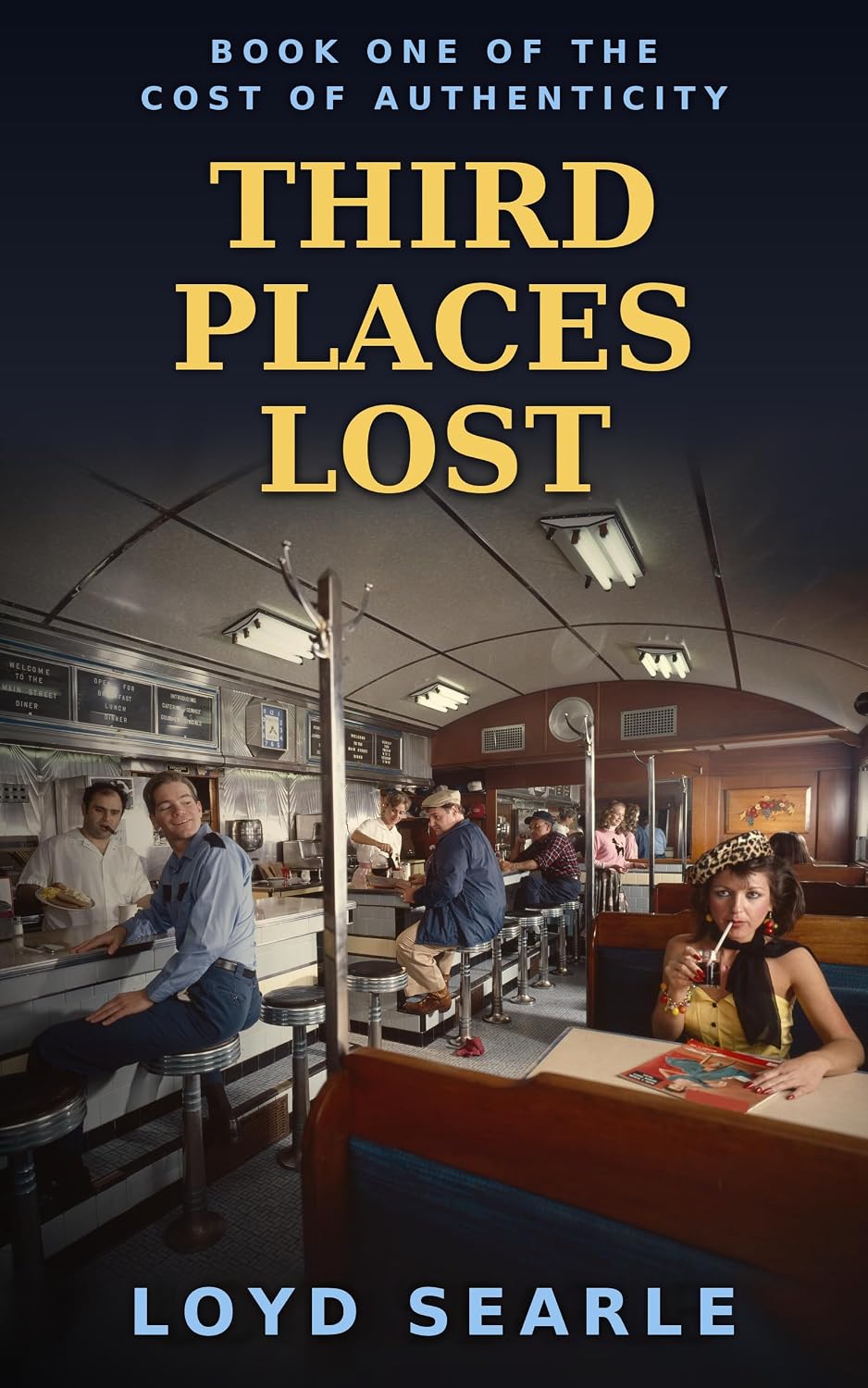
Something is disappearing from American life. Not dramatically. Quietly. The corner bookstore. The neighborhood barbershop. The diner where three generations of the same family knew which booth was theirs. The places where people gathered without being watched, talked without being tracked, and built the kind of trust that no algorithm can manufacture.Ray Oldenburg called them third places — the informal public spaces between home and work where authentic community happens. Shoshana Zuboff explained why they're vanishing: surveillance capitalism, the economic system that funds most of the digital world, depends on your isolation. A person deep in genuine conversation is not scrolling. A community that trusts its own experience is harder to manipulate. Every unmonitored gathering space is a problem to be solved.Almost everything done to Margaret's bookstore in this novel is legal. And every technique used against her community is real — already in use, every day, somewhere in the machinery of digital marketing.Sarah Morrison has spent thirty years performing her life for an audience she can't escape. Award-winning actress. Carefully managed public figure. A woman so skilled at appearing fine that she forgot what fine actually felt like. When her daughter calls from a college town in North Carolina — struggling, reaching, asking her to come — Sarah doesn't fly. She drives. Two thousand miles of American road with her husband beside her and a phone she's been carrying out of habit, the way you carry a stone you picked up miles back without knowing why. The desert strips everything down. A rattlesnake does the rest.What she finds is Margaret's Bookstore — forty-two years of worn floors, mismatched chairs, and a community that built itself in rooms where nobody was tracking it. And a company called Meridian systematically destroying it.Twelve cities. The same playbook each time. Code violations, bank pressure, manufactured social media campaigns — coordinated and invisible, always targeting the independent spaces where people still gather freely. The goal is replacement: monitored, monetized, optimized substitutes for every corner of human life that still escapes surveillance.Sarah has spent thirty years being managed by stories other people wrote about her. She knows exactly what this is.Third Places Lost is a novel about what we lose when every gathering is tracked and every space is optimized. About a mother and daughter learning to be honest with each other. About a bookstore owner who has been fighting alone, the unlikely alliance that forms around her, and the radical ordinary act of being in a room together without anyone watching.The road cracks the egg open. What comes out can't be monitored, monetized, or replaced.Woven throughout the novel is an original soundtrack drawn from The Youngbloods — fifteen songs, tapped directly into the chapter text as live Spotify links so the music plays as you read. A companion front-matter list lets you browse the full soundtrack song by song. Each track was chosen to match the emotional register of its scene, deepening the story rather than illustrating it.Third Places Lost is the first book in The Cost of Authenticity Trilogy, exploring what happens when we fight for spaces where being real is still possible.
“Good books, like good friends, are few and chosen; the more select, the more enjoyable.“
Amos Bronson Alcott
Tablets
More Literary here